Why Solar EPC Contractors in India Are Switching to Tractor-Mounted Earth Augers for Foundation Drilling
There is a number every solar EPC project manager knows by heart: the number of foundation holes.
On a 1 MW ground-mounted solar installation, you are looking at roughly 500 to 700 MS pipe or GI pile foundations, each requiring a drilled hole anywhere between 3 to 6 feet deep and 9 to 18 inches in diameter. On a 5 MW farm, that's upwards of 3,500 holes — before a single module goes up.
Most contractors are still drilling those holes with a crew of labourers, a petrol-powered handheld auger, and a lot of time they do not have.
There is a better way. And it has been sitting in the agricultural implement market for years.
The Problem With Manual Foundation Drilling on Solar Sites
Walk onto any mid-size solar construction site in Rajasthan, Gujarat, or UP and you will see the same thing: 4 to 6 workers taking turns with a petrol auger, stopping every few minutes because it has overheated, making holes that drift 2 to 3 inches off-mark because the machine torques left under load, and losing an entire morning every time the auger bit dulls against a rocky layer.
The numbers bear this out.
A standard 2-stroke or 4-stroke handheld petrol earth auger on Indian solar sites produces:
On a 500-hole project, that is 10 to 17 working days of drilling — before any civil or structural work can even begin.
The EPC contractor's real cost is not just labour. It is the cascade effect: civil gets delayed, module mounting gets delayed, the commissioning date slips, and penalty clauses kick in.
What a Tractor-Mounted Post Hole Digger Actually Delivers
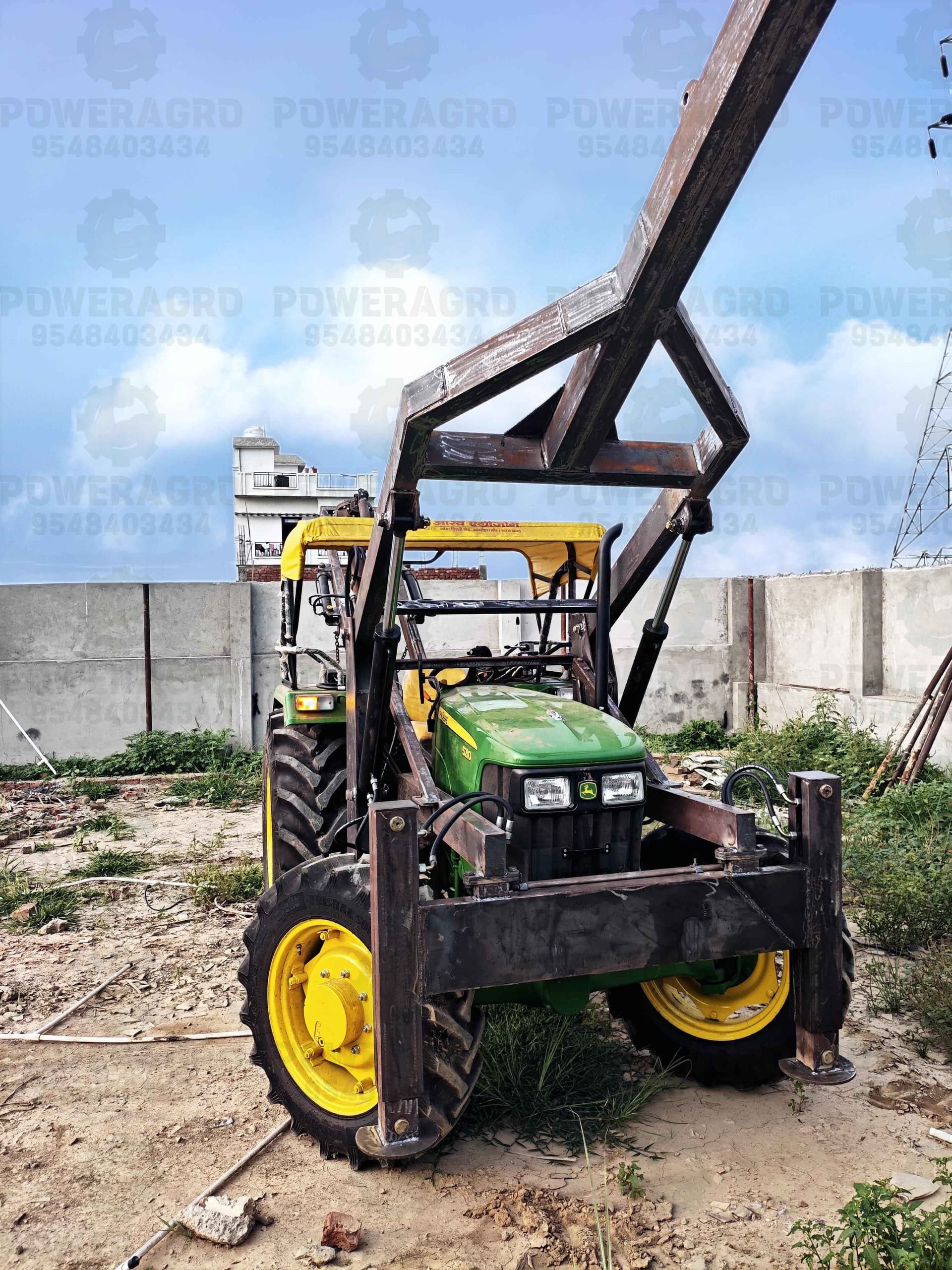
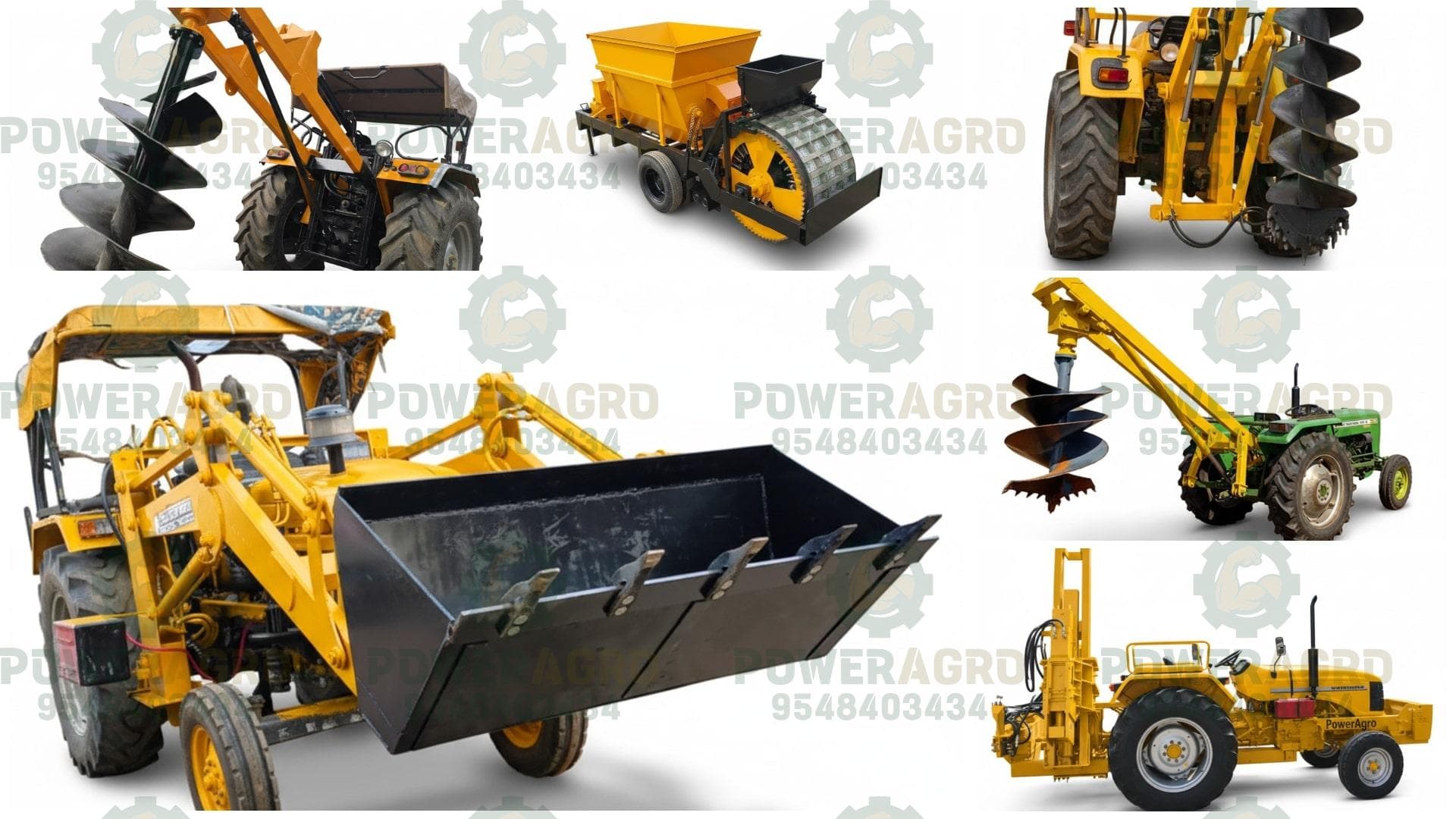
The PowerAgro PHX series is a PTO-driven hydraulic earth auger, mounted on the rear 3-point linkage of any standard 35+ HP tractor. It is the same category of machine that farmers use for plantation pits and fencing posts — but its specs are a direct fit for solar foundation work.
Here is what the machine actually delivers on-site:
Speed
In normal soil (loamy, sandy, or mixed soil common in Rajasthan and Gujarat solar corridors), the PowerAgro PHX series drills one complete hole in approximately 40 seconds.
That is not a marketing figure. It is the operational speed measured in field conditions with a 35 HP tractor running at 540 PTO RPM.
In an 8-hour working day, accounting for repositioning time (the tractor moves between hole positions), a single unit realistically produces 300 to 400 holes per day.
On a 500-hole project, that is 1.5 to 2 days. Against 10–17 days with a petrol auger crew.
Precision
The hydraulic drive delivers consistent rotational torque regardless of soil resistance. When the auger hits a harder layer — clay, compacted gravel, murum — the hydraulic motor adjusts torque automatically rather than stalling or drifting.
The result: holes stay on-mark. For solar mounting structures where pile-to-pile spacing tolerances are typically ±50 mm, this matters. A 3-inch lateral drift on a petrol auger creates rework — repositioning the mounting structure, re-welding, re-aligning the module row.
Two Variants — Choose Based on Your Foundation Depth
Before selecting a model, the first question is: how deep do your structural drawings specify the pile embedment? The answer determines which variant makes sense for your project.
Standard (Non-Hydraulic) Version
The base PHX series runs purely off the tractor's PTO shaft — no hydraulic jacks, simpler drivetrain, lower price point.
For the majority of solar projects in India — where 3 to 4 foot pile embedment is structurally sufficient in normal soil — this version is all you need.
Hydraulic Jack Version
The hydraulic-assisted variant adds a hydraulic downforce system that pushes the auger into the ground with significantly more force, allowing deeper penetration and larger diameter boring without stalling.
For projects in expansive or hard soil where structural engineers specify 5 to 8 foot embedment depths, or where 15–18 inch diameter concrete footings are required, the hydraulic version pays for the price difference in avoided rework and drilling stoppages.
Auger Diameters for Solar Work
| Model | Auger Diameter | Max Depth | Variant | Typical Solar Use Case |
|---|---|---|---|---|
| PHX-4S | 4 inch (100 mm) | 4–5 ft | Standard | Light helical piles, sandy soil |
| PHX-9S | 9 inch (230 mm) | 4–5 ft | Standard | Standard GI/MS pipe piles |
| PHX-12S | 12 inch (305 mm) | 4–5 ft | Standard | Larger pipe piles, concrete footing |
| PHX-18H | 18 inch (457 mm) | 8–9 ft | Hydraulic | Heavy foundations, BC soil, substation piles |
For most open-field solar installations in normal soil, the PHX-9S or PHX-12S (standard, starting ₹60,000) covers the majority of pile foundation requirements. Projects on black cotton soil or with deeper embedment specs should move to the PHX-18H hydraulic variant.
The Labour and Cost Arithmetic
Let us put real numbers to this.
Manual Petrol Auger Setup
PowerAgro PHX-9S Tractor Auger
The machine pays for its purchase price — ₹60,000 — in labour savings within a single 500-hole project. On project 2, it is pure margin.
Soil Conditions Across India's Main Solar Corridors
One concern contractors raise: does this work in our soil type? Here is a practical breakdown:
Rajasthan (Sandy/Alluvial): Near-ideal conditions. PHX-9S at full speed. Depth consistency is excellent. Minimal bit wear.
Gujarat (Mixed Alluvial + Rocky patches): Works well in alluvial zones. Rocky outcrops require bit inspection every 100–150 holes. Hardened steel replaceable teeth handle most Gujarat soil profiles.
Maharashtra & Telangana (Black Cotton Soil): Black cotton soil expands when wet and contracts when dry, which resists the initial auger entry. Operate in dry conditions or use the PHX-12S for wider purchase. Replaceable auger teeth are essential here — budget for a fresh set every 200–250 holes in BC soil.
UP & Bihar (Loamy/Alluvial Indo-Gangetic): Ideal. PHX-9S performs at maximum output rates here. Fastest ROI geography for this machine.
Odisha & Jharkhand (Laterite/Hard Murrum): Harder going. The heavy-duty gear drive handles laterite, but output drops to 150–200 holes/day. Still significantly faster than manual methods. Use hardened-tip bits for laterite-dominant sites.
Tractor Compatibility — You May Already Own the Prime Mover
This is the point most solar contractors miss: you do not need to buy a new machine. You need the attachment.
The PHX series mounts on any standard Category I or Category II 3-point linkage with a 540 RPM PTO shaft — which describes virtually every tractor in active use across Indian solar construction sites.
Compatible with:
If your civil contractor's team already has a tractor on-site — which they almost always do — the PHX attachment simply mounts to it. No new vehicle. No additional registration. No driver to train beyond the attachment controls, which take under an hour to learn.
What About Rocky and Stony Ground?
The PHX series uses replaceable hardened steel teeth on the auger flight. When the bit dulls — which happens faster in stony or laterite soil — the teeth unscrew and are replaced in the field in under 10 minutes without removing the auger from the machine.
Replacement teeth are available from PowerAgro directly and can also be sourced from local agricultural implement markets across India.
Beyond Solar: The Multipurpose Argument
If you are evaluating this machine purely as a solar-site tool, the ROI calculation above already closes the case. But the PHX series is not a single-use machine.
Once a solar project wraps, the same attachment is immediately useful for:
For EPC contractors who operate multiple projects per year, the PHX auger stays productive between solar projects rather than sitting idle.
Frequently Asked Questions
Q: What is the minimum tractor HP needed to run the PHX series effectively on solar sites?
A: 35 HP is the minimum. A 35 HP tractor handles the PHX-9S (9-inch auger) reliably in normal soil. For the PHX-12S or PHX-18H, 45–55 HP is recommended to maintain torque in harder soil conditions. Most tractors on Indian construction sites fall in the 45–65 HP range, so compatibility is rarely an issue.
Q: Can the PHX auger handle drilling at the precision required for structural pile alignment?
A: Yes. The 3-point linkage mounting keeps the auger in a fixed vertical orientation relative to the tractor. For sites where pile centres are marked with string lines or pegs, the operator aligns the auger tip to the mark before engaging the PTO — achieving centre-to-centre accuracy within 25–30 mm consistently.
Q: How do we handle sloped terrain on solar sites?
A: Solar sites are typically graded before civil work begins, so slope is managed by the site prep team. On mild gradients (up to ~10°), the 3-point linkage can be adjusted to maintain auger verticality. Steep gradients require site grading prior to drilling — standard civil practice regardless of equipment type.
Q: What is the warranty on the gearbox and hydraulic components?
A: PowerAgro provides a 6-month warranty on hydraulic components and the main gearbox against manufacturing defects. The heavy-duty gear drive is designed for continuous operation — Indian contractors in fencing and plantation work regularly report 3 to 5 years of operation on original gearboxes with proper gear oil maintenance.
Q: Can we get a demo before purchasing?
A: Yes. Contact us on WhatsApp with your site location. For large-scale EPC requirements, we can arrange a product demonstration at our manufacturing facility in Khatauli, Muzaffarnagar, UP, or connect you with a contractor already using the machine in your region.
Q: Are spare parts and auger bits available pan-India?
A: All PowerAgro implements are shipped with a basic spares kit. Additional auger bits in all standard diameters (4, 9, 12, 18 inch) are available for direct purchase. We provide pan-India delivery from our factory in Muzaffarnagar, UP, with most orders reaching customers within 3 to 7 working days.
The Bottom Line
Ground-mounted solar is not slowing down in India. The government's 500 GW renewable target by 2030 means EPC contractors across Rajasthan, Gujarat, Maharashtra, and UP are looking at years of project pipeline — and every one of those projects starts with the same thing: drilling holes.
The contractors who win on margin are the ones who solve that bottleneck mechanically rather than throwing more labour at it.
A ₹60,000 attachment that mounts on a tractor you already have, drills a hole every 40 seconds, and pays for itself inside a single project is not a capital expenditure decision. It is a no-brainer.
---
Ready to spec the right auger for your solar project?
Contact our team directly:
We respond to all inquiries within 24 hours. For project-scale requirements, send a WhatsApp message with your site location, soil type, and pile specification — we will advise on the right model and quantity.