Ring Pit Method in Sugarcane: Yield Data, Pit Geometry & Tractor Mechanization
Sugarcane is India's most important commercial crop, spanning 5.45 million hectares with an annual harvest of 454.61 million tonnes (Government of India, Agricultural Statistics at a Glance). Yet traditional flat-bed cultivation traps farmers in low yields: bud germination is only 30% to 35%, late-emerging tillers die from overcrowding, and monsoon winds frequently topple shallow roots.
The Ring Pit Method (also developed as Mother Shoot Technology by ICAR-Indian Institute of Sugarcane Research, Lucknow) solves this. By replacing flat linear furrows with deep circular micro-basins, this geometry-driven method boosts cane yields from 76 tonnes/ha up to 125–165+ tonnes/ha while cutting water and nitrogen waste by over a third.
Here is the complete agronomic blueprint, backed by ICAR and university trial data.
1. Proven Research & Benchmark Numbers
Decades of trials by the ICAR-Indian Institute of Sugarcane Research (IISR), state agricultural universities, and participatory on-farm demonstrations document significant advantages over conventional flat planting:
2. Yield & Resource Comparison (Flat vs. Ring Pit)
The table below contrasts standard conventional flat planting against the ICAR-IISR Ring Pit system:
| Parameter | Conventional Flat Method | ICAR-IISR Ring Pit Method | Farm Advantage |
|---|---|---|---|
| Planting Geometry | Shallow linear furrows (75–90 cm apart) | Circular pits (75 cm diameter × 30 cm depth, 105 cm grid) | Uniform 360° light & canopy aeration |
| Number of Pits / Hectare | Continuous furrows | ~9,000 circular pits / ha (~3,600 pits / acre) | Concentrated micro-root zones |
| Bud Germination Rate | 30% – 35% | 75% – 85% | Simultaneous sprout emergence |
| Average Cane Yield | 76 t/ha (30–32 tonnes/acre) | 125–165 t/ha (50–65+ tonnes/acre) | +65% to +110% higher output |
| Nitrogen Required | 8.48 kg N / tonne cane | 2.34 kg N / tonne cane | -72% fertilizer cost per tonne |
| Irrigation Water Use | 100% (Flood baseline) | 60% – 70% (30%–40% saved) | +51.6% water use efficiency |
| Crop Lodging (Windfall) | High (shallow 10–12 cm root base) | Near zero (30 cm deep anchored roots) | Protected against monsoon lodging |
| Sugar Recovery | Baseline (9.5% – 10.2%) | +0.3 to +0.5 units higher | More sucrose from mature mother stalks |
| Multi-Year Ratoon Crops | 1 to 2 cycles | 3 to 4 viable ratoon cycles | Multi-year input savings |
3. Sugarcane Yield Comparison by Method
| Cultivation Method | Cane Yield (ICAR Benchmark) | Gain vs. Conventional | Relative Output |
|---|---|---|---|
| Conventional Flat Planting (Traditional practice) | 76 t/ha (~30–32 tonnes/acre) | Baseline | 1.0x (100%) |
| Paired-Row Deep Trench (Improved linear furrow) | 110 t/ha (~44 tonnes/acre) | +45% higher (+34 t/ha) | 1.45x (145%) |
| Standard Ring Pit Method (ICAR-IISR research) | 125 t/ha (~50 tonnes/acre) | +64.5% higher (+49 t/ha) | 1.64x (164%) |
| Ring Pit + Drip Fertigation (Progressive farm record) | 165 t/ha (~66 tonnes/acre) | +117% (+89 t/ha) | 2.17x (217%) |
4. Pit Geometry & Field Setup Guide
Field geometry is the core of this system. Follow these standardized ICAR dimensions:
1. Grid Spacing: Mark a grid of 105 cm × 105 cm across the field (leave a 65 cm perimeter border).
2. Pit Size: Dig circular pits 75 cm (30 inches) in diameter and 30 cm (12 inches) deep. Maintain a 30 cm undisturbed wall of soil between adjacent pits.
3. Soil & Manure Charging: Mix 3 kg Farmyard Manure (FYM), 20g DAP, 16g MOP, and 2g Zinc Sulphate into the bottom loose soil of each pit.
4. Bicycle-Spoke Sett Placement: Place 20 two-budded treated cane setts horizontally in each pit, arranged radially like the spokes of a bicycle wheel (40 total buds per pit). Cover with 3–4 cm of loose soil and irrigate.
5. Gradual Soil Backfilling: As shoots grow to 45–55 days (4th-leaf stage), push the loose perimeter excavated soil back into the pit in stages (5–7 cm at a time) until the field is completely leveled before the monsoon rains.
5. Solving the Manual Labor Bottleneck: Tractor Pit Diggers
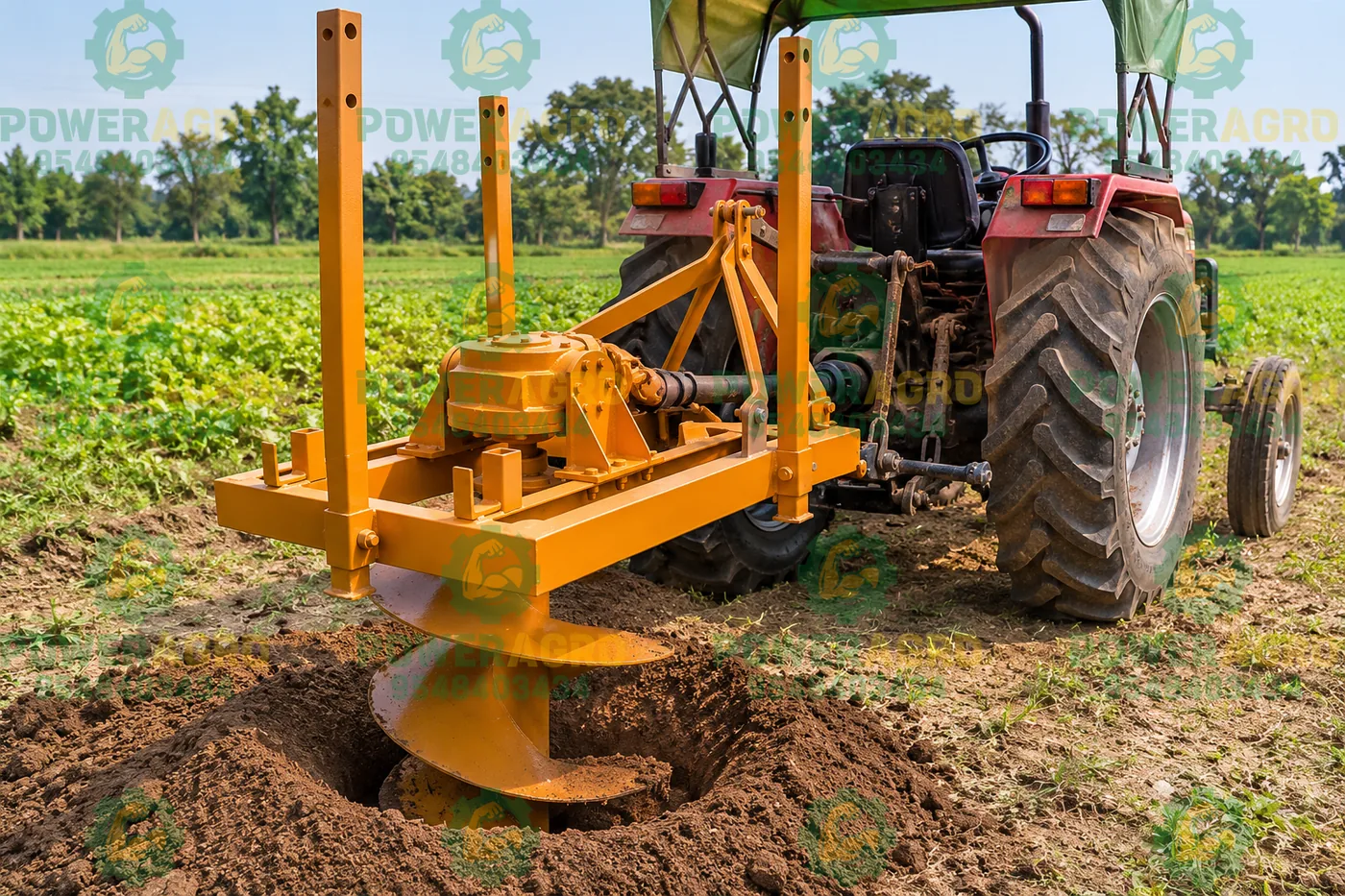
The primary historical challenge of the Ring Pit method has been excavation: one hectare requires 9,000 pits (3,600 pits/acre).
Digging 9,000 pits by hand demands 150 to 200 manual worker-days, creating delays and escalating planting costs. Mechanization solves this entirely:
| Metric | Manual Shovel & Spade Labour | PowerAgro Tractor Ring Pit Digger |
|---|---|---|
| Digging Speed | 30 to 45 minutes per pit | 30 to 40 seconds per pit |
| Daily Output (8-Hour Shift) | 10–15 pits per labourer | 600 to 1,000+ pits / day |
| Labour Needed for 1 Acre | 35–45 worker-days | 1 Tractor Operator + 1 Helper |
| Cost per Pit | ₹15 – ₹25 / pit | ₹3 – ₹6 / pit (fuel & tractor run) |
| Depth & Diameter Accuracy | Inconsistent depth across the block | 100% uniform 75 cm dia × 30–90 cm depth |
| Tractor Requirement | None | 15 HP to 65+ HP (PTO 540 RPM) |
6. PowerAgro Tractor Sugarcane Pit Digger Models
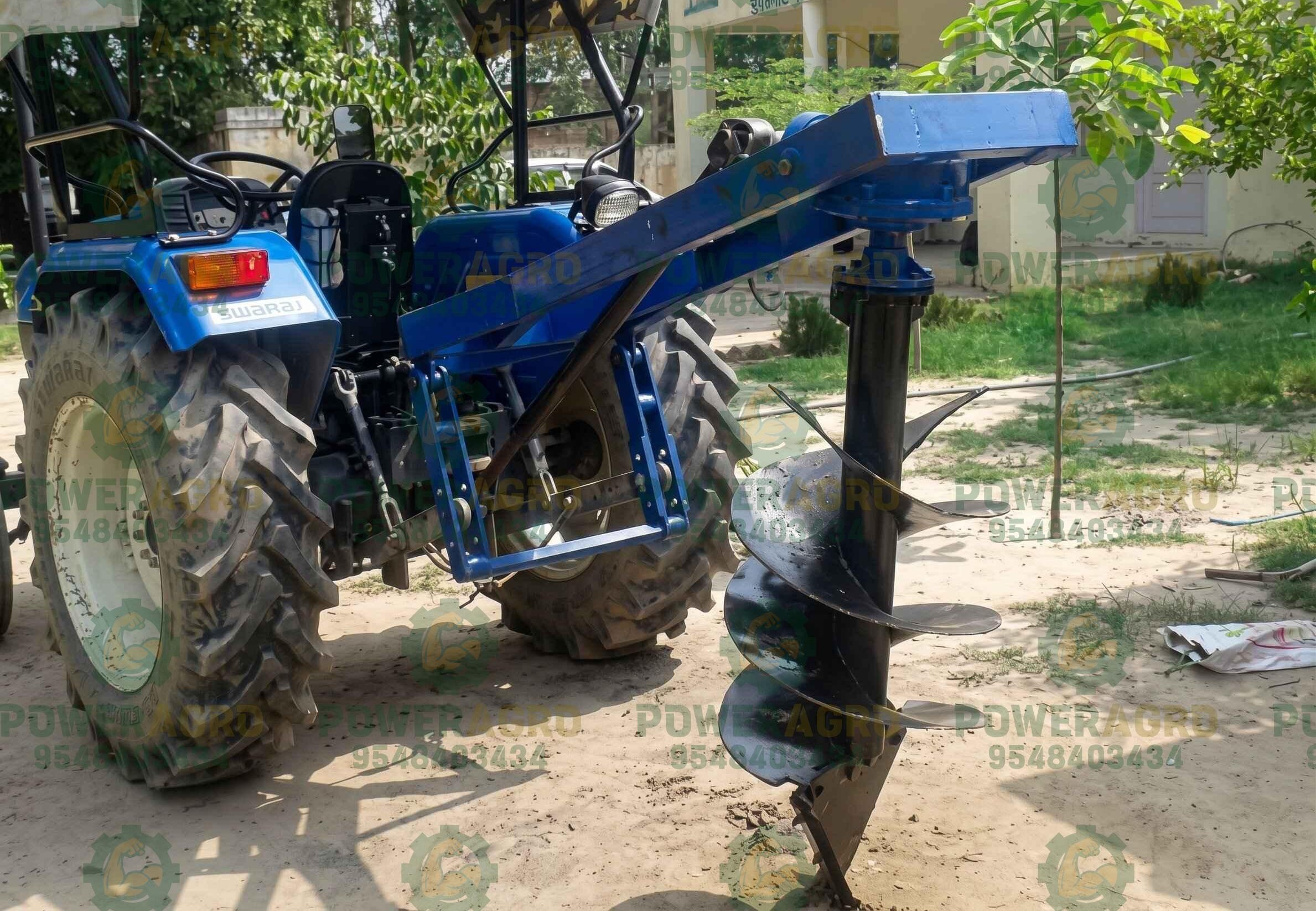
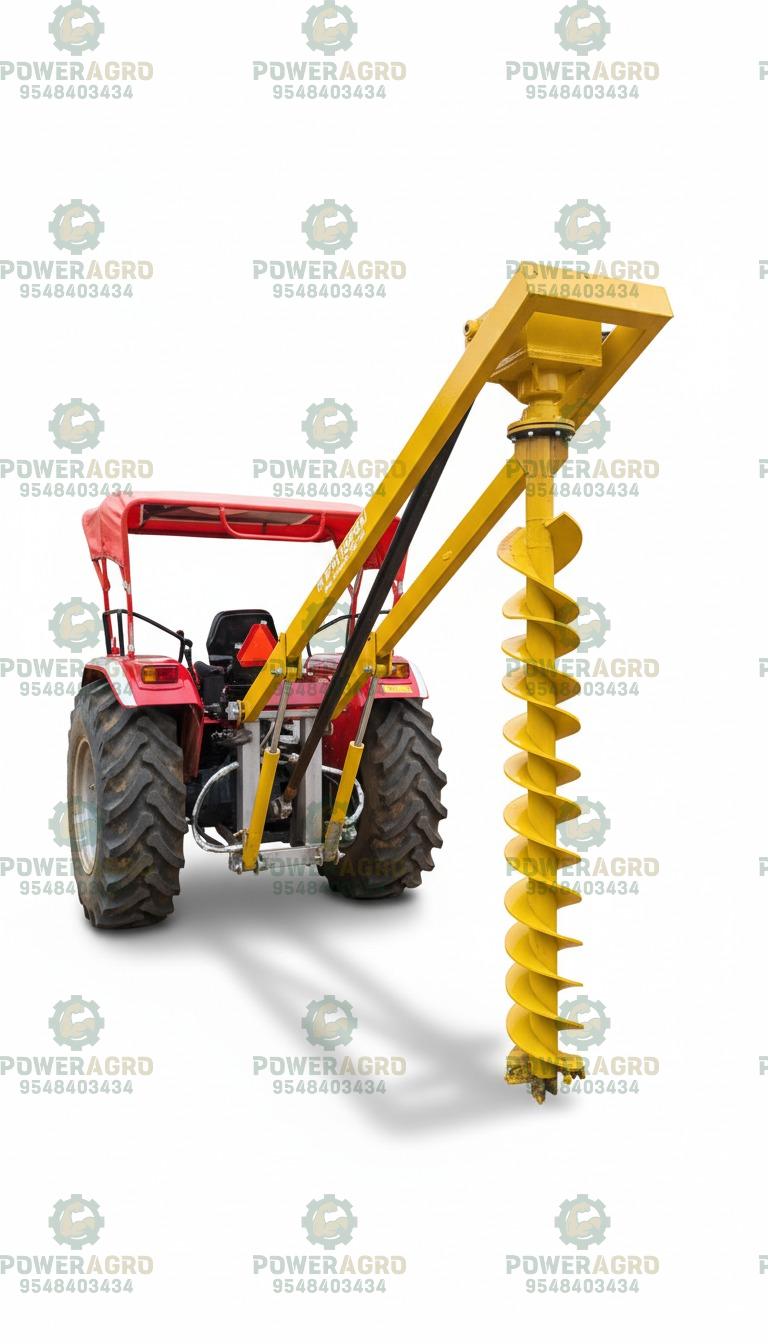
Manufactured directly in Khatauli, Uttar Pradesh (the heart of India's sugarcane belt), PowerAgro builds heavy-duty PTO-driven diggers engineered for Cat-I & II tractor linkages:
Every machine includes universal bolt-on fitment for Mahindra, Swaraj, John Deere, Massey Ferguson, Sonalika, New Holland, Eicher, and Kubota tractors with zero chassis cutting.
👉 Explore complete machine specifications, video demos, and factory dispatch details on our Sugarcane Pit Digger Product Page.
Frequently Asked Questions
Q: What is the main reason Ring Pit yields are higher than conventional furrows?
A: Ring Pit planting suppresses weak, late-emerging side tillers and channels nutrients into uniform "mother shoots". Each pit grows 30–35 thick, heavy canes with 360-degree sunlight exposure and root systems anchored 30 cm deep.
Q: Can a 15–25 HP mini tractor run a Sugarcane Ring Pit Digger?
A: Yes. The Single Ring Pit PTO model is engineered with a high-torque reduction gearbox that runs efficiently on 15–25 HP mini tractors (Mahindra Yuvraj, Captain, VST) as well as 45–65+ HP utility tractors.
Q: How much water is saved with the Ring Pit sugarcane method?
A: Controlled trials by ICAR-IISR demonstrate a 30% to 40% reduction in total irrigation water compared to conventional flood furrows, with irrigation water-use efficiency increasing by 51.6%.
Q: Where can I buy a verified Tractor Ring Pit Digger machine in India?
A: PowerAgro Industries manufactures and ships tractor-mounted single, double, and hydraulic pit diggers directly from its Khatauli (Uttar Pradesh) factory with pan-India road transit delivery. Contact +91-9548403434 for ex-factory pricing.
7. Research References & Scientific Sources
The agronomic data, yield benchmarks, and resource metrics in this article are drawn from published research papers, government reports, and institutional agronomy manuals: